Being Likeable By Keeping Your Mouth Shut
 Behavioral psychologists have been bantering around the idea of what they call Repulsion Hypothesis for years. It states that people find people who have beliefs and attitudes that are extremely different from their own as repulsive.
Repulsive Hypothesis
Repulsive is a very strong word. It’s the word that comes to mind when I have to repair or maintain our septic system. It’s not the kind of feeling you want your customers and prospects to have about you or your company.
Most everyone is passionate about something. It could be as innocuous as running, photography or scrap booking. These are subjects that are generally not going to offend anyone. On the other hand there are passions of peril, which include hunting, politics, animal rights, religion, sex and more.
Sex, Guns and Rock and Roll
There is certainly nothing wrong with being passionate about any of these activities, but be forewarned, they will cause a heightened level of either positive or negative emotion when discussed in conversation. Let me give you an example.
 Years ago I hired a professional speaker to teach customer service skills to my clients. He was an expert on the subject; he was funny and extremely effective. He was also very passionate about his religious belief and he didn’t mind sharing his views openly in his presentation.
Please don’t suppose that I think there is anything wrong with being passionate about what one believes, I applauded it, but I do think there is an appropriate time and place for expressing those beliefs.
At the conclusion of each seminar the audience filled out an evaluation and the comments ranged from outstanding to offensive. For every person who commented on how much they enjoyed his religious references, there was another who found them offensive. For every person he was attracting with his beliefs, he was repelling another who possessed a different set of beliefs.
Turn Off Or Turn On?
When I showed him the evaluations and suggested ways he could still talk about his beliefs without offending anyone, he wanted nothing to do with it. He was so blinded by his passion for what he believed that he was willing to offend half the people in his audience.
You may feel my friend had every right to do and say what he did. You might even be a little offended by my suggesting he change his presentation. If so, it’s because you and my friend have a similar belief system. But, would your opinion of his behavior change if I told you he was a Hare Krishna or a Moslem or a Wicca or a Jew or a Christian or an Atheist?
Are You Stupid Or Something?
If so, why? Could it be because when someone disagrees with you they are implying that you’re somehow flawed? That you’re stupid? That you’re uneducated? That you’re lower on the totem pole of life?
This lesson is not about being moderate with your passion, far from it; it’s about helping people feel good about themselves through restraint. There is a time and place for certain conversations and there is a time and a place to avoid those same conversations.

Albert Einstein
Albert Einstein once defined success in this way. Success=X+Y+Z where “X” equals Work, “Y” equals Play, and “Z” equals “Keep your mouth shut.”
Far too many salespeople and business owners fail to succeed because they just can’t keep their mouth shut when it comes to sharing their views on potentially perilous conversational topics. So what’s a passionate person to do?
Before I go further, it’s critically important that you understand what I’m about to tell you. It is OK not to disclose certain things about yourself. In fact, in certain situations, it’s praiseworthy not to disclose certain things about yourself. People who share their opposing view and opinions repel people, while people who share similar views and opinions attract them.
Friends And Family
I’m not suggesting you withhold critical information from your friends or your mate. If you want to build a friendship or long term personal relationship with someone, you’re eventually going to have to have those conversations and you’ll either work your way through them or not. But there is no good reason to have these more intimate and potentially explosive conversations with a customer?
Rules Of The Road
Here are some basic rules about conversation that will make you more likable and more attractive.
- Never initiate a conversation with a customer or a prospect that challenges their views on sex, religion, politics etc. Don’t do it.
- If a customer or prospect wants to talk about their opinion on one of these subjects, let them talk.
- If you do not agree with their opinion, listen without disagreeing with them. Silence does not mean you agree. You might even learn something about the subject that you didn’t know before.
- If you do agree with their opinion, let them know that you agree. This will make them feel validated while simultaneously drawing them closer to you. We like people like us.
- If you’re in a group setting composed of people with different opinions, refer to rules number 1,2 and 3 unless you agree with the person who has the final buying decision in the group, then refer to rule number 4 but do it in private. If you share your opinions openly in public, you will be seen as attractive and likable to some, while repelling others.
Conclusion
 I saw a funny skit on television recently where a young man was lost in a small European hamlet on a moonlit night. He heard a wolf howling in the distance so he started knocking on all the doors looking for safety yelling, “Please let me in, I’m an American.” No one responded. Then, just as the wolf was almost upon him, he knocked on the last door in town and begged, “Please let me in, I’m a Canadian.” Where upon a woman opened the door and saved him from certain death.
You will find many of the zealous beliefs and actions people demonstrate to be repulsive. You will find others to be attractive depending on what you value. If you want to win people over, agree when you can, and keep your mouth when you can’t.
Tags: repulsion hypothisis
 Repulsion Hypothesis | Bob Sommers |
  March 15, 2009 12:27 am |
  Comments (1)
 I’m your customer and I want to you to know that I like you and I like doing business with you.
 Propinquity. What a fun word. It means nearness: nearness in proximity, time, kinship, affinity and similarity. If you’re not careful, you’re going to find yourself over using this word, just like I do, in general conversation because it’s so much fun to say.

 All things being equal, experts generally agree that we tend to like competent people especially when they become relevant in our lives. This includes our parents, teachers, doctors, electrician, investment broker, auto mechanic, etc. The opposite is also true. As much as we are attracted to competent people, we are repelled from people who are candidates for the Darwin Awards.
 Earl Nightingale, the inspirational author of “The Strangest Secret,” noted that anyone could become an expert in a very short time. His premise was that if you focused on learning any single subject for one hour a day every day for a year, it would be the equivalent of going to class for eight hours a day, five days a week for almost two and a half months. If you did the same thing for five years, it would be the equivalent of going to class every day for a year.
 There is a huge credibility gap when people or things don’t look like what you expect them to look like. You may remember the crash of Value Jet flight 592 on May 11, 1996. The flight was en route from Miami to Atlanta (a route I often flew) when the low cost carrier went down in the Everglades killing all 110 people on board. The thing that immediately stuck me when I heard about the accident was a promise I made to myself just a few months earlier.
 As I child I was interested in learning how things worked. On any given day you could walk into my bedroom and find what started out to be a perfectly good transistor radio, toaster or cuckoo clock sprawled out in little pieces on my desk. I was so curious about how these things worked that I decided to go to collage and become an engineer.
 I started by introducing myself to 10 new people everyday with the purpose of learning their name along with something interesting about them. It was not easy at first, because I didn’t know how people were going to respond to my open and inquisitive nature. What I discovered, however, was that virtually everyone I met was delighted to have an opportunity to talk about themselves.
 Watch Out for Soft Spots
 The state of Hawaii (and most other states) will not issue a drivers license to anyone until they’ve attend an approved driving class, driven 50 hours on a temporarily permit with a qualified driver and passed a comprehensive written exam and an on-road driving test. Then, in order to keep your license, you must be able to prove to the police and other drivers that you understand and practice the rules of the road. But, there are absolutely no rules or training required by the state if you want to have and raise children.
 Study after study shows that likable children and likable adults are happier, healthier and they live longer than their counterparts. These studies do not show the same results for smart people or rich people even though these are the skills we emphasis in school. Again, there is nothing wrong with being smart and rich; both are great. But imagine if you could be smart and rich and happy and healthy and live a longer more productive life at the same time. That sounds like success.
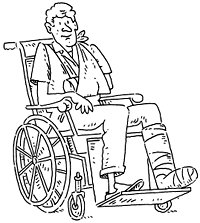 We dislike the people we hurt